After my experiments with the sweet potato cakes I was left with quite a lot of leftover cake and decided to try baking it into a cheesecake to give it a new lease of life. This may sound odd, but I was inspired by my trip to Chicago in the summer, where I saw a carrot cake cheesecake. This involved a thin carrot cake base, topped with cheesecake and another round of carrot cake. I didn’t actually taste it (I went for an Oreo cheesecake) but the idea has stuck with me.
For my cheesecake I crumbled some of the sweet potato cake and pressed it into the base of my tin, in place of the usual biscuit base. I then made a basic vanilla cheesecake mix, and cut the remaining cake into 1cm cubes. I stirred most of the cake cubes into the cheesecake mix and used the rest to top the cheesecake.

I was really excited to see how the cheesecake would look when I sliced into it and after an impatient wait for it to cool I had my first slice. The cheesecake was very incredibly smooth and creamy and the cake base was soft but held together well. Most of the middle cake cubes had drifted towards the surface but they had stayed fully submerged and although soft, were still different enough to add their own texture. The top cake cubes had turned a lovely golden brown and gone ever so slightly chewy. The little pieces of pecan nut I had used on top of the sweet potato cake were given a light toasting and added their own toasty nut flavour when you happened upon one.

The orange and spices from the sweet potato cake had permeated into the cheesecake itself and given it a lightly spiced flavour of its own. Quite unusual on first bite but addictively good. The whole thing reminded me a bit of bready and butter pudding, only with much more creamy filling. Just divine. So if you have a bit of leftover cake lingering in a tin, don’t throw it out – turn it into a delicious cake cheesecake instead. I’m sure you won’t be disappointed.
Sweet Potato Cake Cheesecake
(Recipe adapted from Nigella Lawson)
 Ingredients
400-500g sweet potato cake (or cake of your choice)
50g butter
600g cream cheese
150g caster sugar
3 eggs
3 egg yolks
1 tsp vanilla extract
Method
Preheat the oven to 180C. Have a deep 8inch/20cm springform tin close at hand.
Weigh out 150g of the sweet potato cake and crumble it into fine pieces using your fingers. Melt the butter and pour it over the top of the cake crumbs. Mix together briefly and then press into the base of the tin. Press down well so that they form a flat base. Set aside.
In a large bowl, beat the cream cheese until smooth. Add the sugar and beat again, followed by the egg yolks, eggs and vanilla.
Cut the remaining sweet potato cake into 1cm cubes. Lightly stir three quarters of the cake cubes through the cream cheese mixture. Do not over mix or the cake will start to break apart.
Pour the cheesecake mix into the springform tin. Scatter the remaining quarter of the cake cubes over the top of the cheesecake and press down so they are partially submerged.
Boil the kettle. Wrap the tin in a large sheet of foil and place it inside a deep baking tray. Place the tin in the oven and pour the boiling water into the baking tin, so that it comes half way up the sides of the cheesecake tin. Make sure your foil comes above the water level.
Bake for 55 minutes. Test if the cheesecake is done by giving it a gentle shake. If the centre ripples and looks very runny, then give it 5 minutes more. However, a gently wobble in the centre is fine as the cheesecake will continue to cook after you have taken it out of the oven.
Take the cheesecake out of the oven and baking tray. Remove the foil and place the whole tin on a cooling wire to cool.
When cool, place in the fridge to chill for at least 4 hours to ensure it is sufficiently set.
When ready to serve, run a hot knife around the inside edge of the tin to release the cheesecake. Remove the tin collar and serve.
Serves 10-12
Makes one 8inch/20cm cheesecake


 Ingredients
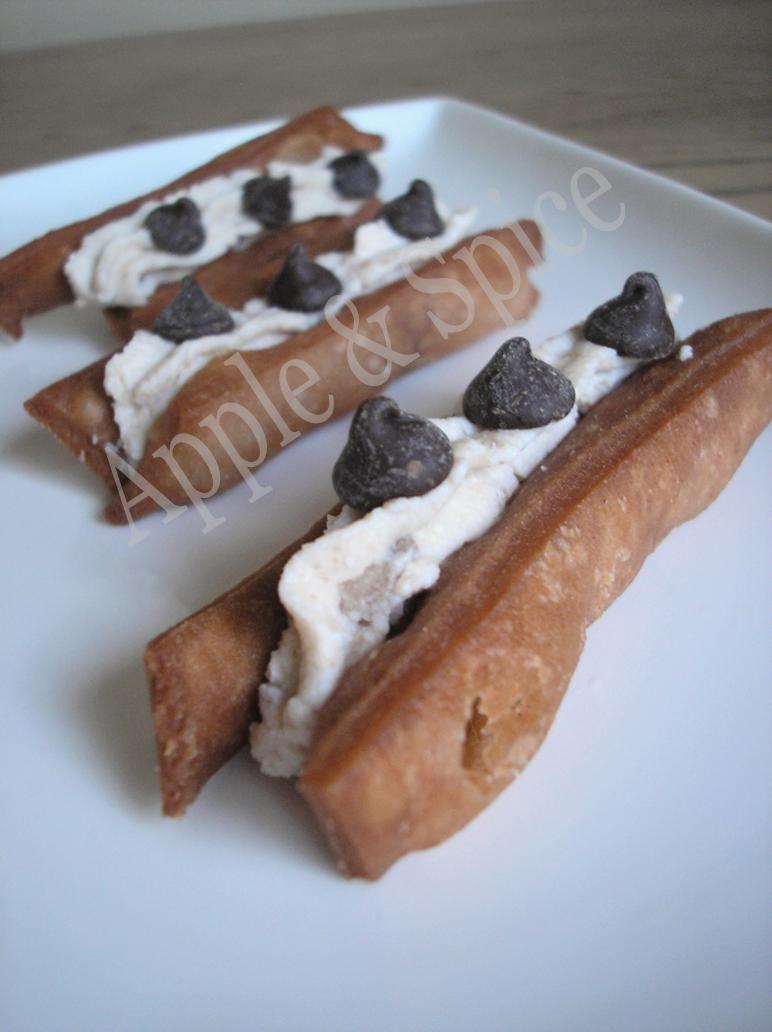
 Once the cannoli dough is made and rested it is rolled out until very thin before squares or circles are cut out and rolled around special cannoli moulds and then deep fried. I didn’t have any cannoli moulds, nor could I find any in the two kitchen shops I visited. I decided to try improvising my own by using the middle thick cardboard tube from the end of my clingfilm. It seemed the right sort of size and very study and I was able to get four good tubes from it. I felt quite pleased with my ingenuity and hoped it would work. I wrapped my dough around the tubes and dropped them into the hot oil. They dropped to the bottom of the pan then rose to the surface and started to sizzle – hurrah it worked – or so I thought. The dough stayed around the tubes for about 5 seconds before suddenly puffing up and springing free from the tubes into weirdly shaped blobs. Well darn. Strangely enough they also puffed up and became hollow, like very fragile fried profiterole shells. I’ve no idea why this happened but it did offer me a solution of how to fill my cannoli so it wasn’t a total loss.
 Cannoli Dough
 Line a sieve with a cheesecloth or sheet of kitchen roll. Place the ricotta in the sieve, over a bowl, and cover with a saucer. Weight it down with a heavy can, and let the ricotta drain in the refrigerator for at least 2 hours or overnight.


 Ingredients

 Ingredients


 For the Cake
 Heat the sugar in a cast iron skillet or another heavy bottomed pan with high sides. Heat over a medium-low heat, stirring occasionally, until the sugar melts into a clear brown caramel syrup. It should be the colour of tea. Gradually add the boiling water, pouring it down the sides of the pan so that if the syrup foams and bubbles up, you should be protected.
 Heat the oven to 180C. Grease and flour two 9 inch round cake pans.
 In a large bowl, combine the icing sugar, the burnt sugar syrup, butter and vanilla. Beat with a mixer at medium speed for 2 to 3 minutes, scraping down the bowl now and then to bring the ingredients together. Add 2 tablespoons of the milk and continue beating until the frosting is thick, soft, smooth and easy to spread. Add a little more sugar if it is thin, and a little more milk if it is too thick.
 Mix the sugar and cinnamon together in a small bowl. Peel, quarter and core the Bramley apple and cut into ½ cm slices. Melt the butter in a large frying pan and add the apple slices. Cook for 1-2 minutes until just beginning to soften. Carefully turn over onto the uncooked side and scatter over the cinnamon sugar. Cook for 1 minute more before removing from the heat and leaving the apple to cool in the pan before using.


 Ingredients


 Ingredients
 As promised, here are the recipes for the other sweet treats I made for the afternoon tea party I had recently to accompany the
  You can’t have a traditional afternoon tea without the presence of fruitcake. As I was aiming for elegant food, I decided to experiment with baking the fruitcake mix in cannelé moulds in order to make them bite size. This worked a treat and when topped with a little marzipan flower I think they turned out rather dainty. You could eat a couple while still leaving room to sample other things and baking them individually meant they cooked very evenly and stayed wonderfully moist.
 Weight out the raisins, currants and sultanas into a bowl. Sort through the fruit a handful at a time, removing any stalks still attached to the fruit (these won’t be nice to crunch on).Cut the apricots and cherries into small pieces and same size as the raisins. Grate over the zest of the orange and lemon.Drizzle over the brandy, give everything a stir and then cover the bowl with clingfilm and leave for at least 4hours or preferably overnight to allow the fruit to absorb the brandy and plump up.
 I had to include something rich and chocolaty for the chocoholics in my family and these little truffle squares were ideal. You can flavour the chocolate truffle any way you wish but I decided to use a little blossom honey to add a floral note and a touch of sweetness. Adding a small amount of liqueur, the zest of an orange or some strong espresso would also be good. As the truffles were being served with the rest of the afternoon tea treats, I decided to make some small tuile squares on which to serve them. This made them easier to pick up and eat, as the truffles can turn slightly soft if they are left out for more than half an hour and I didn’t want people getting chocolate over their fingers – not ideal for an elegant tea party!
 Ingredients